

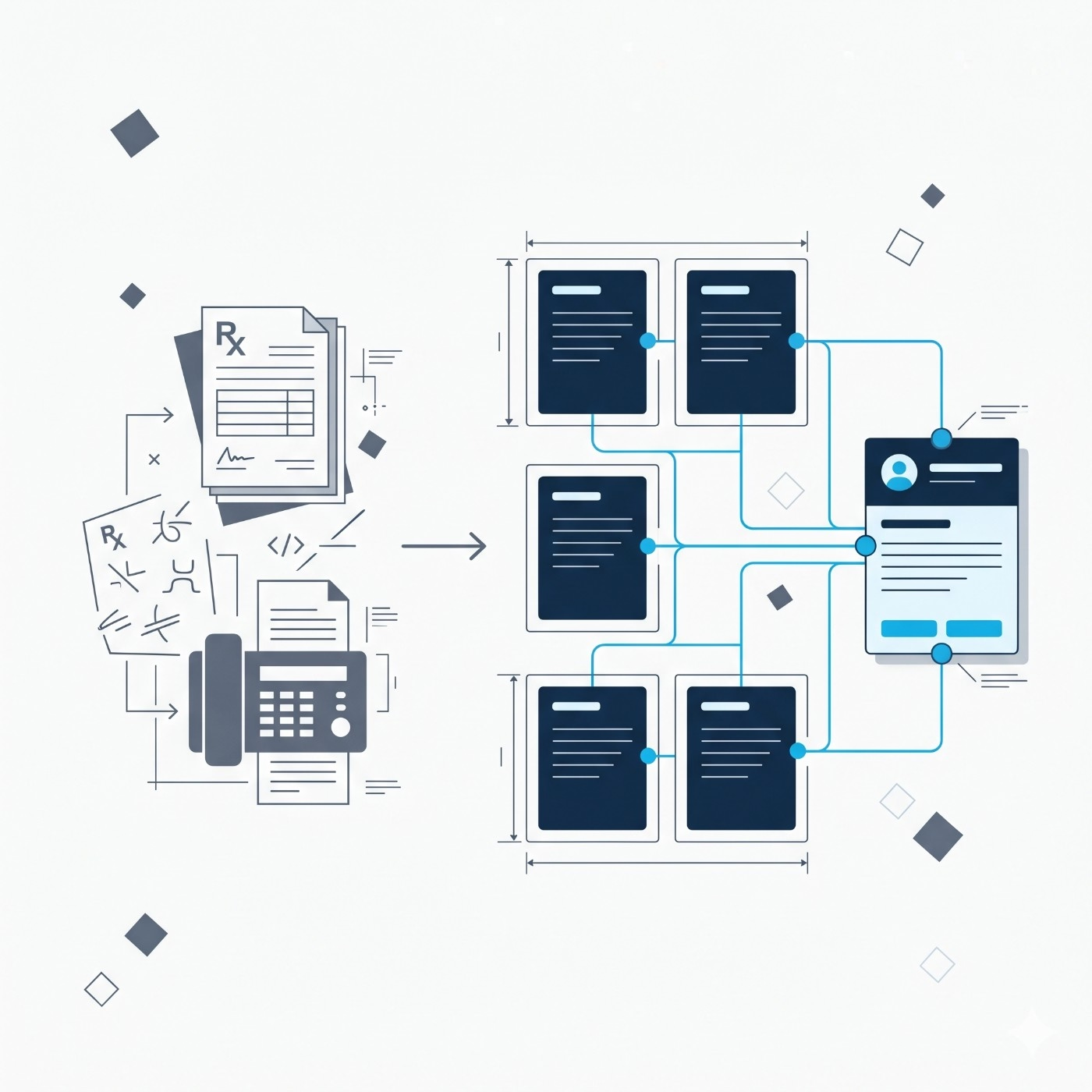


HIPAA-aware by design
Access control, audit trails, and PHI boundaries are designed in from the first sprint — and we sign a BAA as subcontractor.
Proof layer Every PHI touchpoint documented in a data-flow map you keep.
AI intake, scheduling, documentation, and claims agents, HIPAA-aware, built into your EMR, with a human on every clinical decision.
What we build
Every healthcare build ships against the same four constraints — no exceptions for demos or deadlines.
Access control, audit trails, and PHI boundaries are designed in from the first sprint — and we sign a BAA as subcontractor.
Proof layer Every PHI touchpoint documented in a data-flow map you keep.
API and interface-engine integration against your exact stack — FHIR and HL7, scoped in a readiness sprint before we build.
Proof layer Integration scoped and tested against your sandbox, not a mock.
Agents handle intake, scheduling, and documentation drafts. Anything clinical routes to a person, every time, with full logging.
Proof layer Escalation rules and transcripts reviewable by your compliance lead.
A named senior lead owns the outcome. You see working software weekly, not a status deck monthly.
Proof layer Senior review on every merge; 30-day exit on embedded pods.
Charting, scheduling, and billing eat the day before a single patient is seen.
Documentation and scheduling automation
EMR, scheduling, and lab portals never talk, so nurses become integration code.
Interface-engine and API integration
Patient enquiries arrive at 2am and a phone tree is a liability, not a service.
Voice intake with escalation rules and full logging
Use cases
Eight workflows where automation pays back first — each scoped, evaluated, and capped before it touches production.
24/7 patient calls answered, triaged, and logged — clinical questions escalate to on-call staff.
Clinics without a night shiftForms, history, and insurance captured before the visit and written into the EMR.
High-volume front desksSlot booking, waitlist backfill, and no-show reduction wired into your scheduling system.
Practices losing slots to no-showsVisit notes drafted for clinician review and sign-off — never auto-filed.
Teams charting after hoursCoverage checks and prior-auth packets assembled and tracked to decision.
Back offices buried in payer portalsClaims scrubbed before submission; denials triaged and routed with the paper trail attached.
Revenue-cycle teamsEMR, labs, scheduling, and comms connected through interface engines and APIs — so nurses stop being the integration layer.
Multi-system practicesIntake volume, wait times, and denial rates on one dashboard your administrator actually opens.
Leaders flying blind on opsCase studies
How our teams solve critical patient-care and clinical-operations problems through strategy, engineering, and innovation.





24/7 monitoring for blood cancer transplant and CAR-T patients, combining wearable vitals with automated clinical alerting.
Read story


A RAG-powered voice agent answers practice questions, checks availability, and books appointments without front-desk staff.
Read story


AI health check-ins, in-app booking, and secure provider messaging connected into the clinic CRM for one patient lifecycle view.
Read story


Cloud EHR unifying scheduling, documentation, billing, and mobile EVV for home health and post-acute care teams.
Read story
Appointment booking, payments, and AI support for a wellness studio in one WhatsApp thread — no more calls, DMs, and spreadsheets.
Read story
Lab results, booking, prescriptions, and provider messaging in one app, backed by a staff-facing CRM integration.
Read story



A white-labeled backbone for labs, providers, employers, and device makers to launch branded at-home testing programs.
Read storyCapabilities
Six connected capabilities, delivered as one seamless service.
See full capability matrix →A build decision in 2 weeks, not a slide deck.
Agents with evaluations, approval gates, cost ceilings, and a full audit trail.
A named senior engineer inside your team, owning an outcome.
Specification first, AI-assisted, senior review on every merge.
Workflows wired and instrumented, with the payback counted.
Pipelines and lineage your AI can actually rely on.
FAQ
Straight answers before the first call. If yours is not here, ask it on the call — we answer the hard ones first.
Ask the hard oneWe scope against de-identified or synthetic data wherever possible, and any PHI access is limited to named engineers under the BAA, logged, and documented in a data-flow map you keep.
No. Agents handle intake, scheduling, documentation drafts, and back-office workflows. Anything clinical routes to a person through defined escalation rules, every time.
We deliver HIPAA-aware systems and sign a business associate agreement as subcontractor. Compliance is a property of the whole deployment and we document our side of it honestly rather than claiming a certification we do not hold.
API and interface-engine integration, scoped during the readiness sprint against your exact stack.
Voice agents with defined escalation rules and full transcript logging. Anything clinical routes to a human.
Start the conversation
Tell us where the admin piles up. We will tell you what software can take off your team, and what should stay with a person.