


First-party data you own
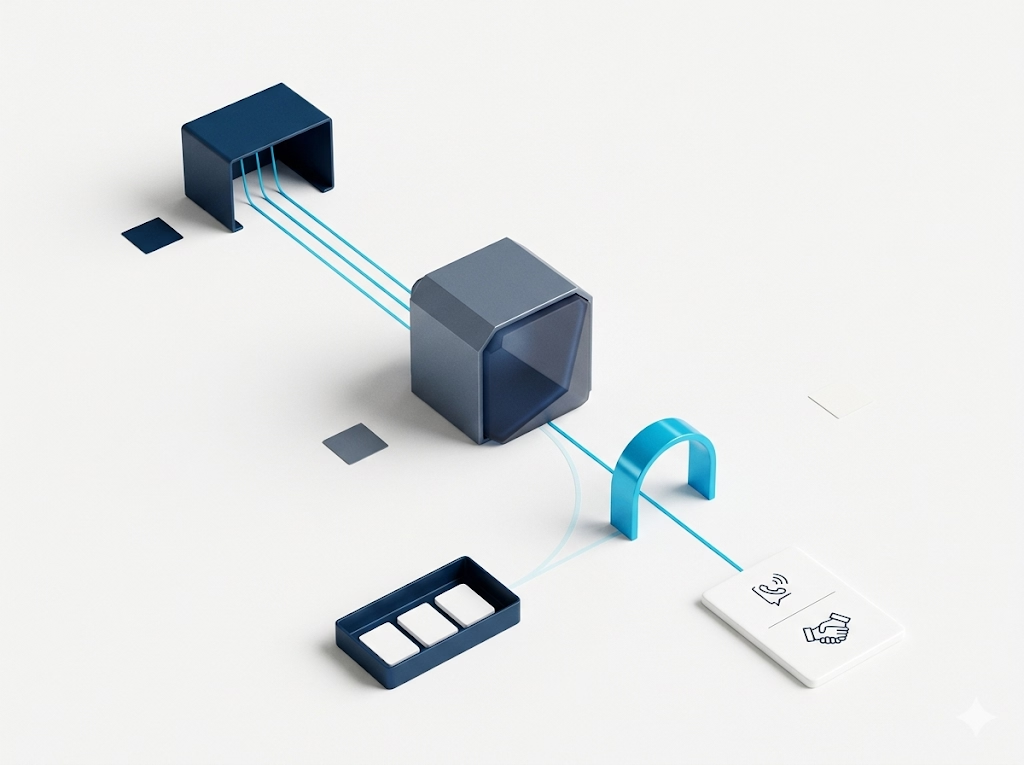
Server-side capture runs on infrastructure under your control — not a SaaS black box — so the data survives platform and browser changes.
Proof layer Every event and endpoint documented in a data-flow map you keep.
Server-side tracking, automated reporting, and ad-to-CRM attribution — first-party data you own, wired into the dashboards your team already runs on.
What we build
Every tracking and reporting build ships against the same four constraints — no exceptions for launch dates or client demos.
Server-side capture runs on infrastructure under your control — not a SaaS black box — so the data survives platform and browser changes.
Proof layer Every event and endpoint documented in a data-flow map you keep.
Consent state travels with every event. We capture all compliant signal and never promise user-level tracking that privacy law forbids.
Proof layer Consent logic reviewable by your legal or compliance lead.
Spend, conversions, and revenue reconcile to one attribution model across ad platforms, CRM, and analytics — not five conflicting dashboards.
Proof layer Reconciliation checks run on every pipeline sync, with drift alerts.
A named senior lead owns the outcome. You see working dashboards weekly, not a status deck monthly.
Proof layer Senior review on every merge; 30-day exit on embedded pods.
Staff spend 10 to 20 hours a month aggregating platform exports into client spreadsheets.
API pipelines feeding live, automated dashboards
iOS privacy and cookie deprecation erase a third of conversions, so budget flows to the wrong channels.
Server-side tracking on first-party data you own
No one can say which campaigns produced qualified pipeline, only which produced clicks.
Click-to-revenue integration into Salesforce or HubSpot
Use cases
Eight workflows where rebuilt tracking and automation pay back first — each scoped, tested, and reconciled before it drives a budget decision.
First-party events captured on infrastructure you control, bypassing ad blockers and routed to ad-platform APIs.
Teams losing 30%+ of conversionsAPI pipelines pull live data from Google, Meta, and CRM into dashboards — no more month-end spreadsheet marathons.
Agencies burning billable hoursClick data linked to pipeline revenue in Salesforce or HubSpot, resilient to platform updates.
B2B teams selling on long cyclesA BigQuery foundation for blending spend, CRM, and analytics data and calculating custom metrics like true MER.
Teams that outgrew SaaS dashboardsInbound leads enriched, scored against your ICP, and routed to the right rep with the context attached.
Sales teams chasing cold leadsProspecting, personalization, and follow-up sequences automated end to end — with deduplication so no contact is hit twice.
Outbound teams stuck in listsOn-brand content generation, approval workflows, and scheduling for teams running many brands at once.
Agencies scaling without headcountChannel-level MER and CAC on one dashboard, so budget moves on reconciled numbers instead of platform-reported guesses.
Leaders allocating real budgetCase studies
How our teams solve tracking, reporting, and pipeline problems for marketing teams through strategy, engineering, and automation.




Apollo-sourced prospecting, AI-personalized cold email, and deduplicated sending — the full outbound cycle runs without a rep touching a draft.
Read story




One platform runs the full monthly content lifecycle for multiple finance broker brands — AI drafting, structured approvals, scheduling, and performance tracking.
Read story


A product photo sent over WhatsApp comes back as a finished marketing video — analysis, storyboard, voiceover, and edit fully automated.
Read story
Inbound email parsed by AI and written into the CRM automatically, so lead data lands structured instead of buried in an inbox.
Read story
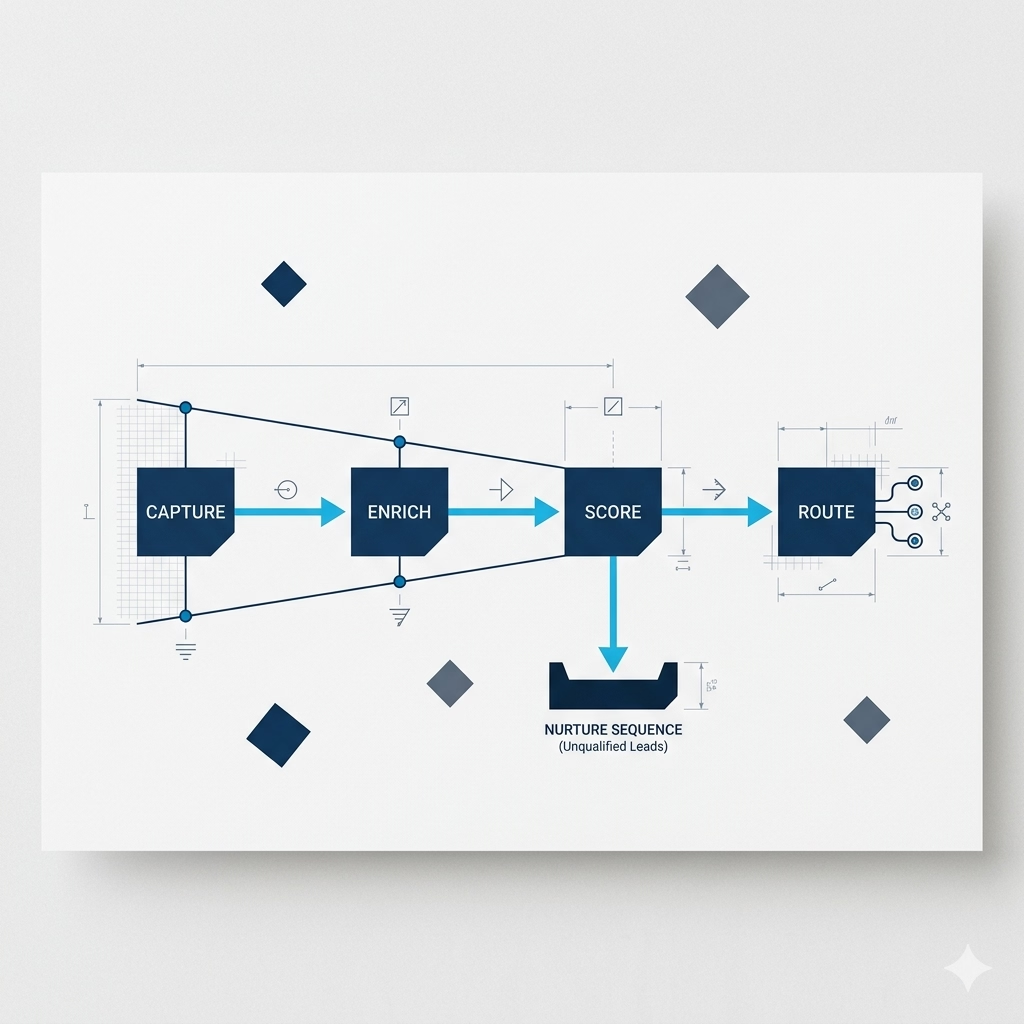
Captured leads scored, segmented, and moved through automated nurture sequences until they are sales-ready.
Read story




A web and mobile product with real-time scheduling at its core — the returning-engagement model behind durable first-party data capture.
Read storyCapabilities
Six connected capabilities, delivered as one seamless service.
See full capability matrix →A build decision in 2 weeks, not a slide deck.
Agents with evaluations, approval gates, cost ceilings, and a full audit trail.
A named senior engineer inside your team, owning an outcome.
Specification first, AI-assisted, senior review on every merge.
Workflows wired and instrumented, with the payback counted.
Pipelines and lineage your AI can actually rely on.
FAQ
Straight answers before the first call. If yours is not here, ask it on the call — we answer the hard ones first.
Ask the hard onePrivacy updates like iOS 14.5 block the browser from sending data back. We fix this by implementing a parallel system for server-side tracking that sends first-party data directly to the ad platform's API.
SaaS tools hit a hard ceiling when you need to blend complex CRM data with ad spend or calculate custom metrics. Custom operational automation gives you complete control over the data architecture.
By eliminating manual export and spreadsheet work, automated data pipelines save an average of 2.5 hours per client report, every month.
No, and any vendor claiming they can is not being honest. Privacy regulations make perfect user-level tracking impossible. We capture all compliant data and use broad metrics like MER to guide strategy.
You do. Server-side containers, warehouse, dashboards, and documentation run in accounts you control, with a data-flow map handed over — no vendor lock-in and no dependency on us to keep it running.
Start the conversation
Tell us where your reported numbers stopped matching reality. We will rebuild the tracking.
 BigQuery
  HubSpot
  Salesforce