


Industries · Legal

AI for the firm's operations, not for its legal judgment

Techtiz builds operations AI for law firms: intake and conflict triage, document and contract processing over the firm's own base, and matter and billing workflow automation. We do not build legal research or analysis tools, and the reason is in the peer-reviewed data below.

Operations, not research Retrieval cites its source Human approves client-facing work
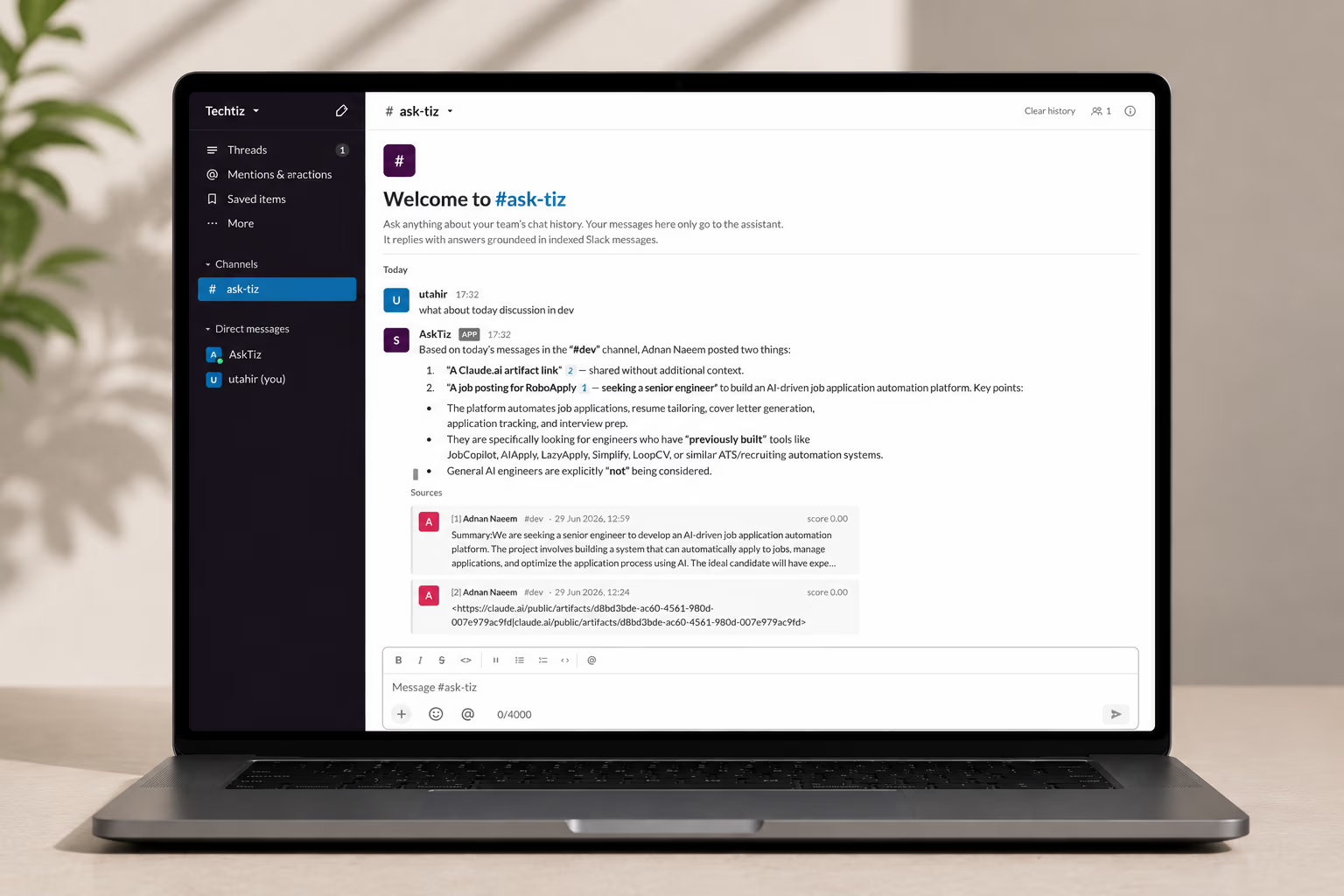
A matter-operations log showing intake triage and document retrieval resolved automatically, with a client-facing draft held at a human-approval gate
Every answer cites its source
Scope

Built for law firm operations — intake and conflict triage, document and contract processing, and matter and billing workflow automation.

Not built for legal research, case-law retrieval, or anything that generates legal analysis a lawyer would rely on.

That exclusion is deliberate and explained below.

The bottleneck Research and Markets, 2026

The enterprise vendors don't serve a 40-lawyer firm.

The AI-in-legal market grows from $4.59B in 2025 to $5.59B in 2026 at a 22.3% compound annual rate (Research and Markets, May 2026), and the services and implementation layer is its fastest-growing segment (Grand View Research). The enterprise vendors consolidated the top of the market. A 40-lawyer firm is not their customer.

22.3% AI-in-legal market CAGR, 2025 to 2026 Research and Markets, May 2026
Where it pays back

Three workflows that pay back now.

  1. Workflow · 01

    Intake and conflicts eat partner time

    Qualification and conflict checks done manually against scattered records.

    Triage with a human gate before client contact

  2. Workflow · 02

    Precedent is unsearchable

    The firm's own base is a folder tree nobody can query.

    Retrieval over your documents, citing the source

  3. Workflow · 03

    Prebill review is archaeology

    Time entries reconstructed at month end from memory.

    Time-entry hygiene and prebill flags

The deal-killer Straight answer

Will it hallucinate and expose us?

This is why the page is narrowed. Peer-reviewed research (Magesh and others, Journal of Empirical Legal Studies, 2025) found leading legal-research AI tools hallucinating between 17% and 33% of the time. That is a professional liability problem, not an engineering inconvenience. So we do not build legal research tools. We build operations systems where retrieval runs over your own documents, every answer cites its source document, and nothing client-facing leaves the system without a human approving it. If you want a legal research product, buy one from a vendor who carries that liability, and read the study first.

Integration reality
Clio-class practice management Litify-class practice management Document management Time-entry systems
Proof
Stated plainly

Voice intake build for a US professional-services firm. Document pipeline and retrieval infrastructure across client work. We have no law-firm past performance to present and we are not going to imply otherwise.

FAQ

Operations AI for law firms, answered.

How is client confidentiality handled?

Retrieval over your data in your environment or a dedicated tenant. Nothing trains public models. The data map is a deliverable written for your ethics review.

Does it work with our practice management system?

Clio-class and Litify-class via API. Legacy systems get a connector.

What do partners actually see?

A monthly report: hours recovered, matters touched, exceptions escalated.

Start the conversation

Automate the operations, keep the judgment yours

Tell us where intake, retrieval, or billing costs the firm the most partner time. We will map what we build — and tell you plainly what we do not.

Scope an operations AI build