

Grounded in your data
Answers come from your own conversations and documents through a retrieval index — never from a generic model guessing.
Proof layer Every answer streams with inline citations back to the source message.
Slack-native knowledge assistants and productivity tools — hybrid retrieval over your own conversations and documents, with every answer cited back to its source.
What we build
Every knowledge-assistant build ships against the same four constraints — no exceptions for demos or deadlines.
Answers come from your own conversations and documents through a retrieval index — never from a generic model guessing.
Proof layer Every answer streams with inline citations back to the source message.
Slack Events API ingestion, calendar and document APIs — the assistant lives inside the tools your team already uses, not another tab.
Proof layer Integration scoped and tested against your workspace, not a mock.
Row-level security on indexed data means employees only surface knowledge from channels and documents they can already see.
Proof layer Access boundaries mapped in writing before a single message is indexed.
A named senior lead owns the outcome. You see working retrieval weekly, not a status deck monthly.
Proof layer Senior review on every merge; 30-day exit on embedded pods.
A decision made six months ago is buried in a thread nobody can find.
A Slack-native assistant that ingests history and answers in plain language
The same question gets asked and re-researched every quarter because nobody can retrieve the original context.
Semantic search over your own conversations, with reranked results
Chat, calendar, and document creation live in separate tools, so context gets lost switching between them.
One assistant surface for chat, scheduling, and document work
Use cases
Eight workflows where a knowledge or productivity assistant pays back first — each scoped, evaluated, and capped before it touches production.
Workspace history ingested into a searchable index — plain-language questions answered with citations to the original thread.
Teams whose decisions live in SlackFull-text plus vector search with AI reranking, so acronyms and company-specific terms surface the right answer first.
Orgs where keyword search failsDecisions, rationale, and technical context preserved and retrievable long after the people who made them move on.
Fast-growing or high-turnover teamsMeeting notes, briefs, and recaps drafted from source material for human review — never auto-published.
Teams drowning in write-upsAvailability checks and meeting coordination handled inside the same assistant surface as chat and documents.
Calendar-tetris organizationsNew hires ask the assistant instead of interrupting seniors — ramp questions answered from real project history.
Teams onboarding every monthNew messages and documents indexed in near real time via event APIs and async queues — the knowledge base never goes stale.
High-volume workspacesRow-level security on the index so private channels stay private — retrieval respects existing permissions.
Security-conscious orgsCase studies
How our teams turn scattered conversations, inboxes, and documents into searchable, working knowledge through strategy, engineering, and innovation.
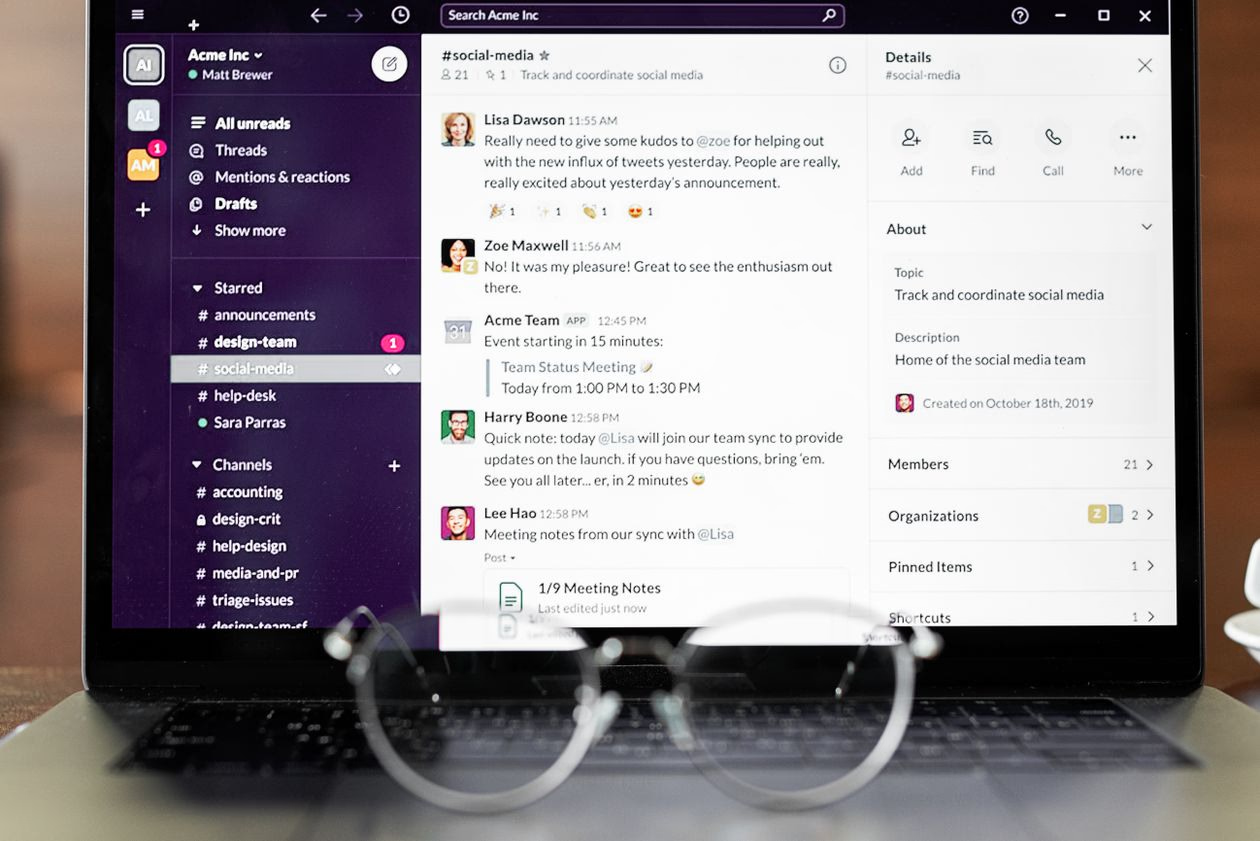


A Slack workspace turned into a searchable knowledge base — hybrid search, AI reranking, and streamed answers with inline citations to the original messages.
Read story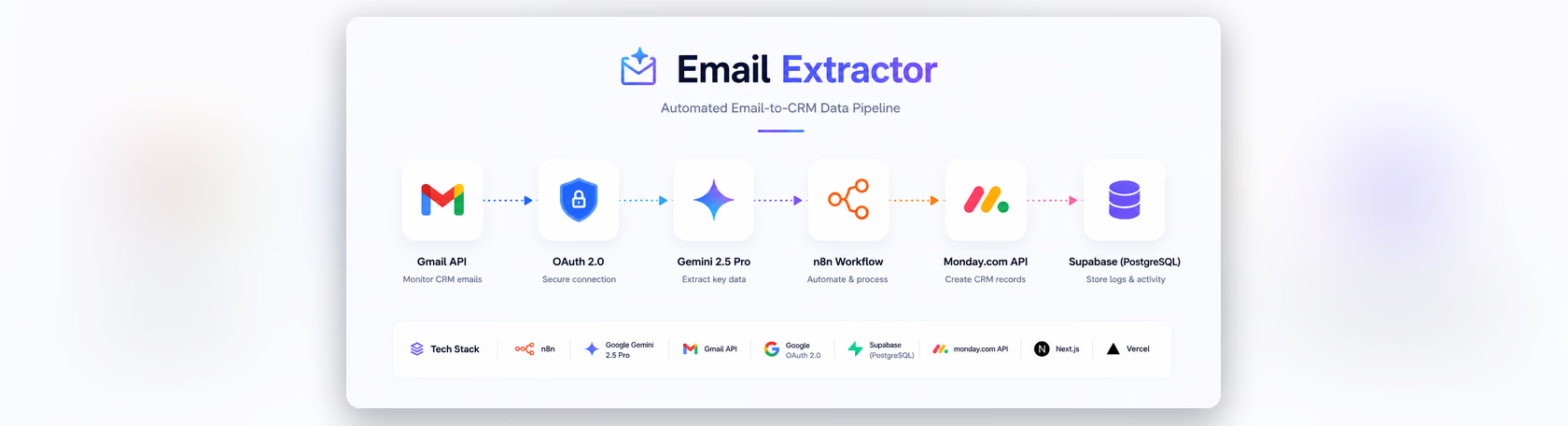


Inbound email parsed by AI and written into the CRM automatically, so reps stop copy-pasting context between inbox and pipeline.
Read story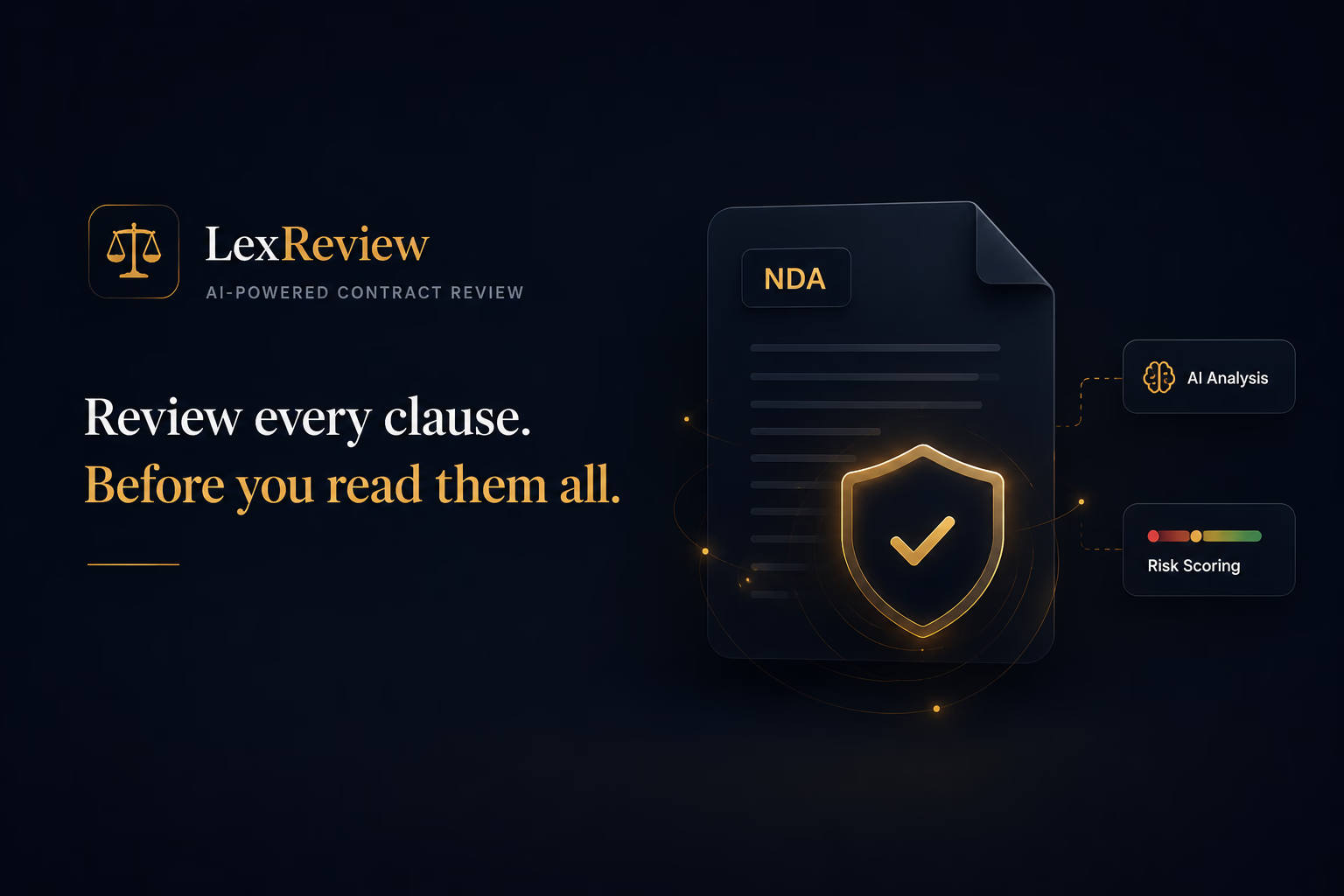
AI-assisted contract review that surfaces risk and key clauses for human sign-off, cutting the reading burden on legal teams.
Read story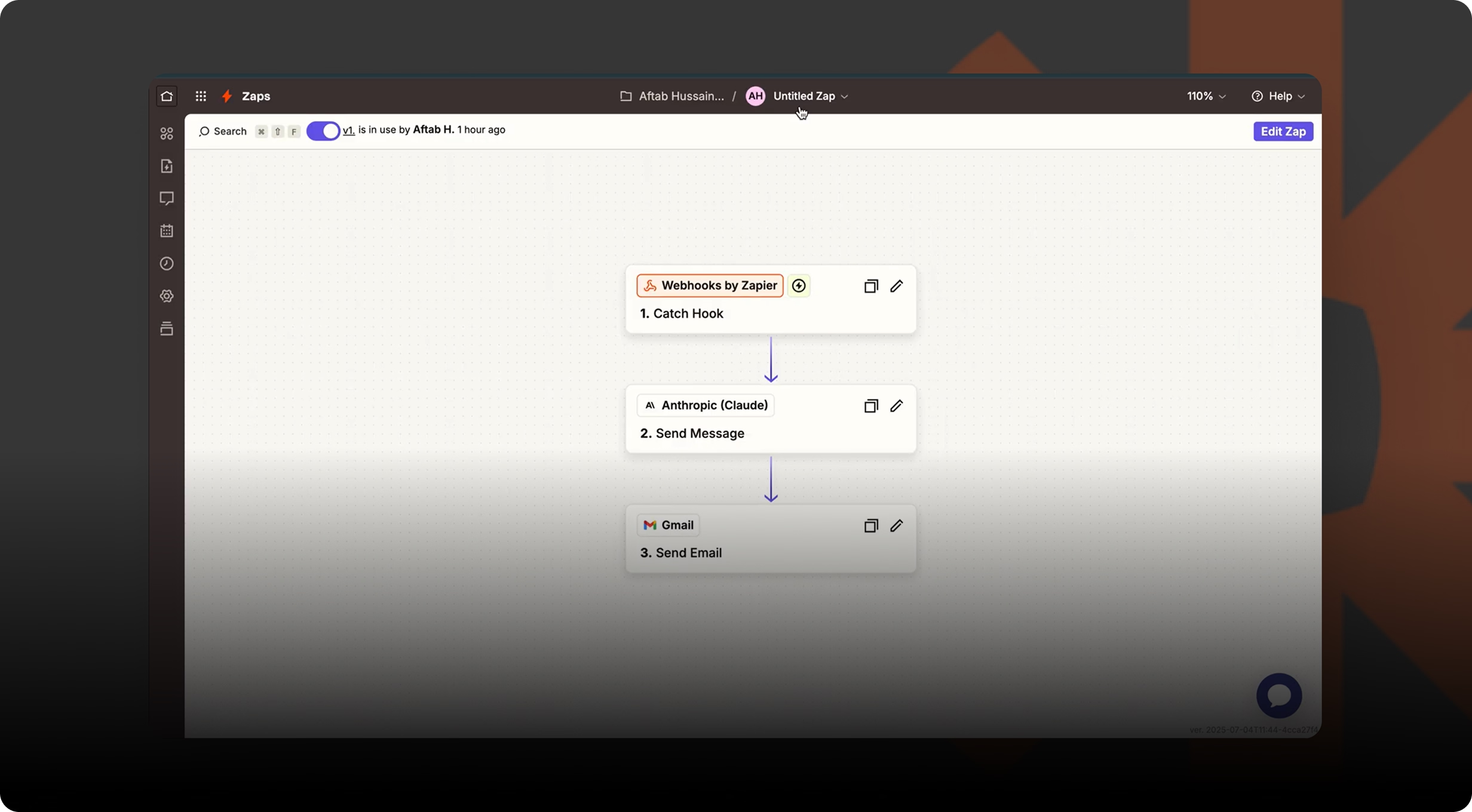

Client data distilled into AI-generated insights delivered to the team automatically, replacing manual research and recap work.
Read story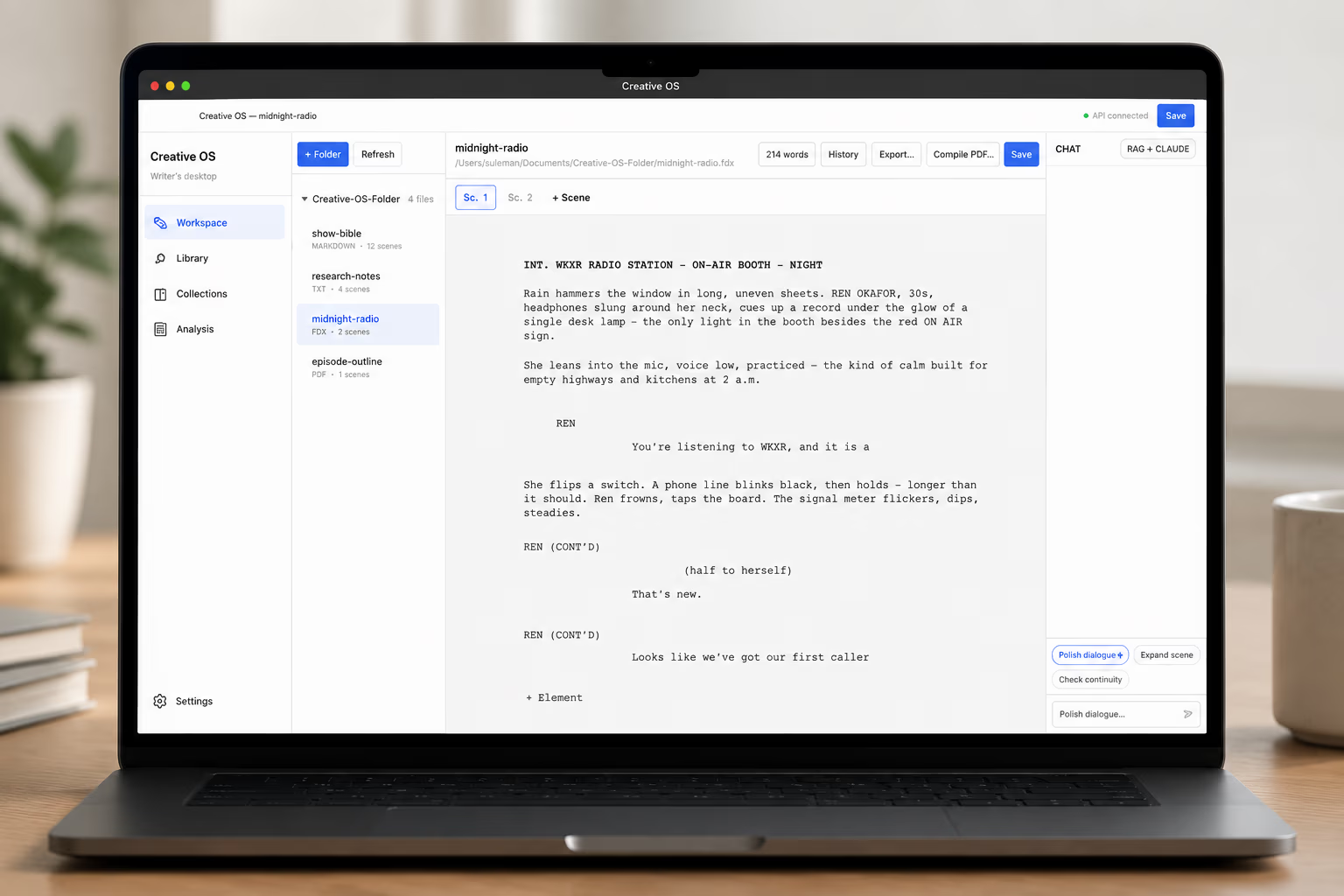
An AI-powered creative workspace that unifies generation, editing, and asset management in one interface instead of scattered tools.
Read storyCapabilities
Six connected capabilities, delivered as one seamless service.
See full capability matrix →A build decision in 2 weeks, not a slide deck.
Agents with evaluations, approval gates, cost ceilings, and a full audit trail.
A named senior engineer inside your team, owning an outcome.
Specification first, AI-assisted, senior review on every merge.
Workflows wired and instrumented, with the payback counted.
Pipelines and lineage your AI can actually rely on.
FAQ
Straight answers before the first call. If yours is not here, ask it on the call — we answer the hard ones first.
Ask the hard oneYour data. We ingest your conversations and documents into a retrieval index, so answers are grounded in what your team actually said and wrote.
Semantic (meaning-based) search combined with keyword matching, then a reranking pass over the results so the most relevant answer surfaces first, not just the closest embedding.
Your environment or a dedicated tenant, mapped in writing before anything is built.
No. Retrieval enforces row-level security on the index, so the assistant only surfaces knowledge from channels and documents the asking employee is already authorized to see.
New messages and documents are ingested continuously through event APIs and an asynchronous processing queue, so the index updates in near real time without rebuilding.
Start the conversation
Tell us where your team wastes time re-deriving context that already exists. We will tell you what a retrieval build looks like on your own data.