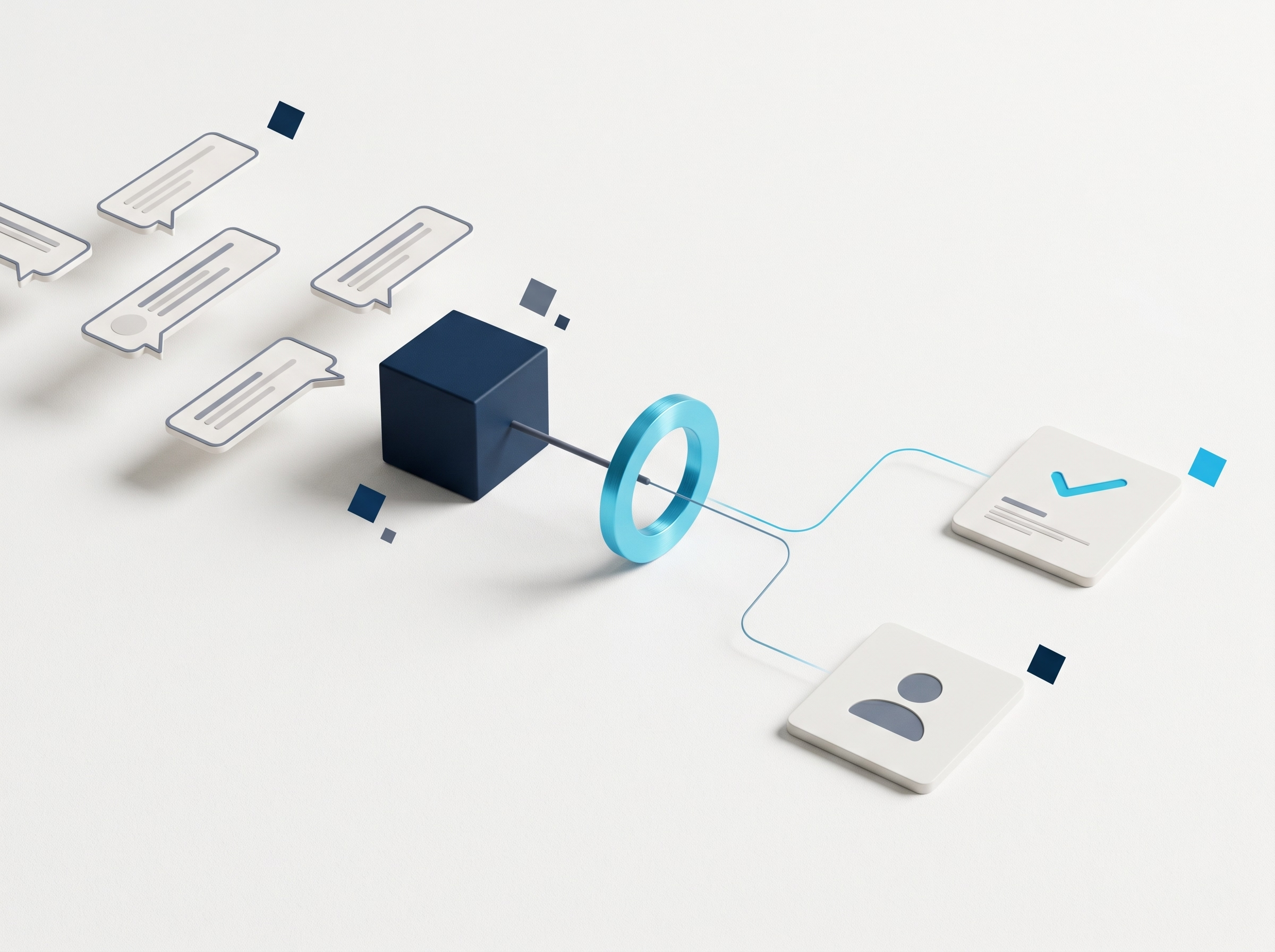
Paid agents waste hours answering repetitive policy and order-status questions.
An intelligent agent that intercepts common queries and resolves them from the approved knowledge base.
Good automation answers the order-status question and gets out of the way. We build confidence-gated support that resolves tier-1 instantly and hands hard cases to a human with context.
Paid agents waste hours answering repetitive policy and order-status questions.
An intelligent agent that intercepts common queries and resolves them from the approved knowledge base.
Generic inboxes require manual sorting before any work can begin.
Software that reads the semantic intent of each message and routes it to the right department instantly.
Call volumes overwhelm municipal lines during emergencies and public events.
A subcontracted intake layer that captures reports, categorizes urgency, and feeds municipal dispatch.
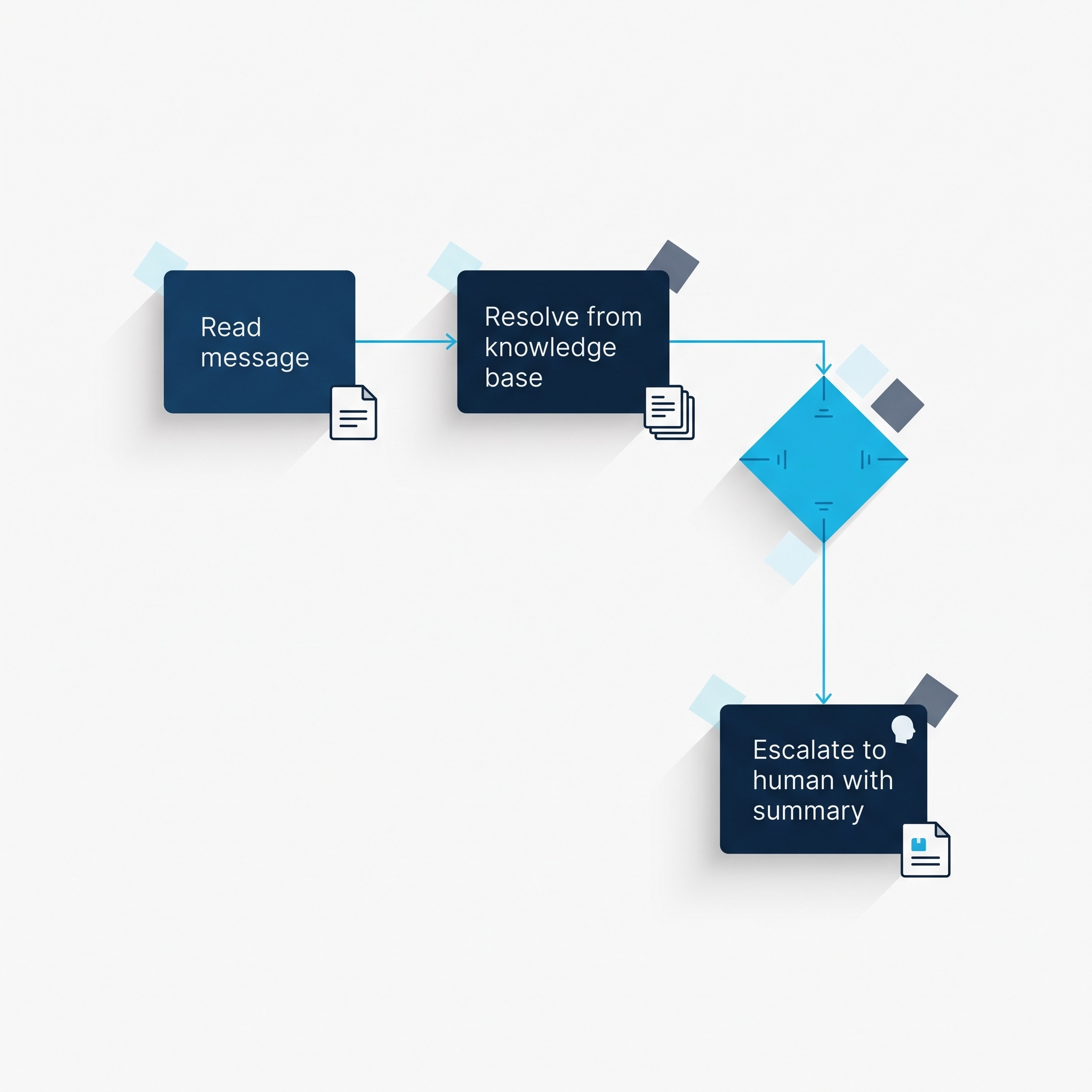
Every message is read, resolved or escalated with context .
The agent reads the incoming message, resolves it from your knowledge base when it is confident, and escalates to a human with a summary when it is not, so a person only sees what needs them.
Teams relying entirely on human operators face an unsustainable cost disadvantage.
The enterprise median for tier-1 deflection now sits above 41 percent.
Most CX leaders report executive pressure to deploy AI in service.
Agents answer the same order-status and policy questions hundreds of times a week while complex cases wait. Manual tier-1 support does not scale, and bad bots damage trust. These figures describe the customer service sector, not Techtiz engagements—and what manual tier-1 costs.
Cost of a live human support interaction, versus $0.10 to $0.25 deflected
StealthAgents, 2026
Faster resolution when agents get AI-generated context, up to 45 percent
Gartner, 2025
Underperforming automation projects that fail on data prep, not technology
Gartner, 2025
Realistic AI deflection rate for order-status inquiries
Built AI, 2026
Responses come only from your approved knowledge base, using strict retrieval parameters.
When the system is not highly certain, it escalates to a human immediately.
Escalations carry a generated summary, so agents resolve faster instead of starting cold.
It sits on top of your ticketing platform via API, leaving the agent dashboard intact.
For SLED scope under NAICS 541512, we build constituent intake and triage layers as your subcontractor, feeding structured data to municipal systems, never facing the agency.
NDA-first, subcontract-only. We work behind the prime, under your brand. We do not pursue prime contracts and we never face the agency.
Human-in-the-loop fallback. Low-confidence cases route to a person immediately, protecting the constituent relationship.
On top of your stack. The intelligence layer integrates by API, with no rip-and-replace of the existing platform.
No. The system is designed with a low-friction, immediate escalation path to a human agent.
It relies exclusively on your approved knowledge base documents, using strict retrieval parameters.
No. It integrates via API as an intelligence layer on top of your current platform.
Natural language processing identifies the core intent; if the phrasing is unclear, it defaults to human routing immediately.
That is the right concern. We set strict confidence thresholds, so anything uncertain escalates to a human, keeping a human-in-the-loop fallback at all times.
Tell us the question your agents answer most. That is the first thing we deflect.
Scope a support build