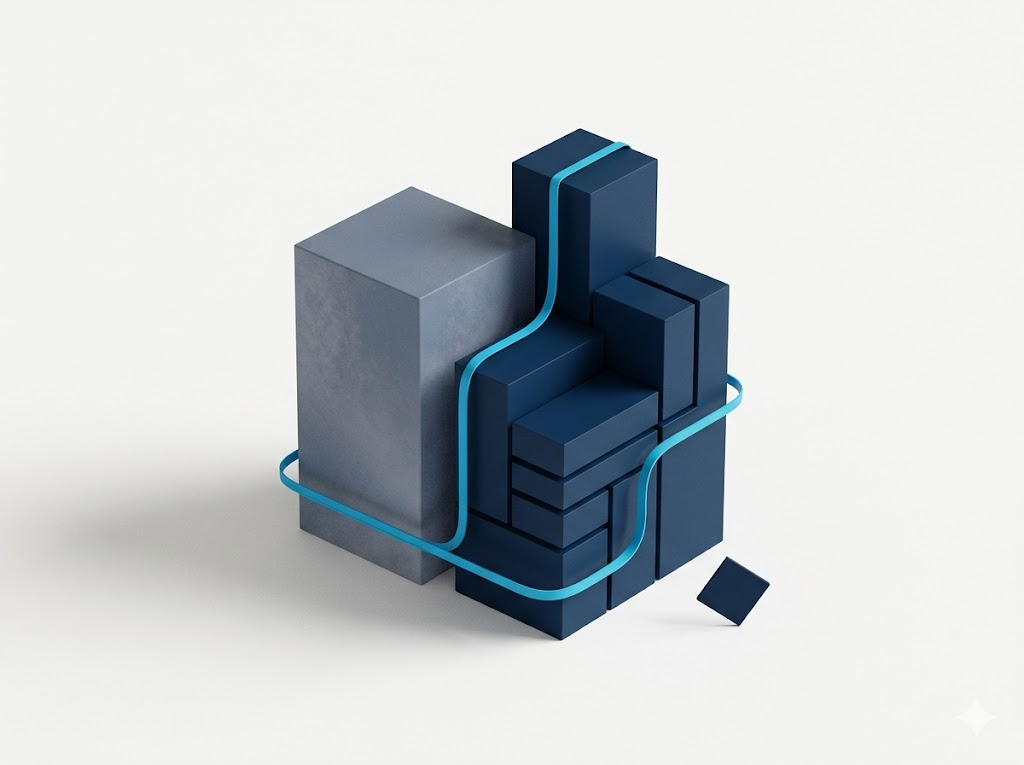


Decades-old monoliths trap data and cannot integrate with modern tools.
An API gateway that securely exposes legacy data to new web apps without altering the core database.
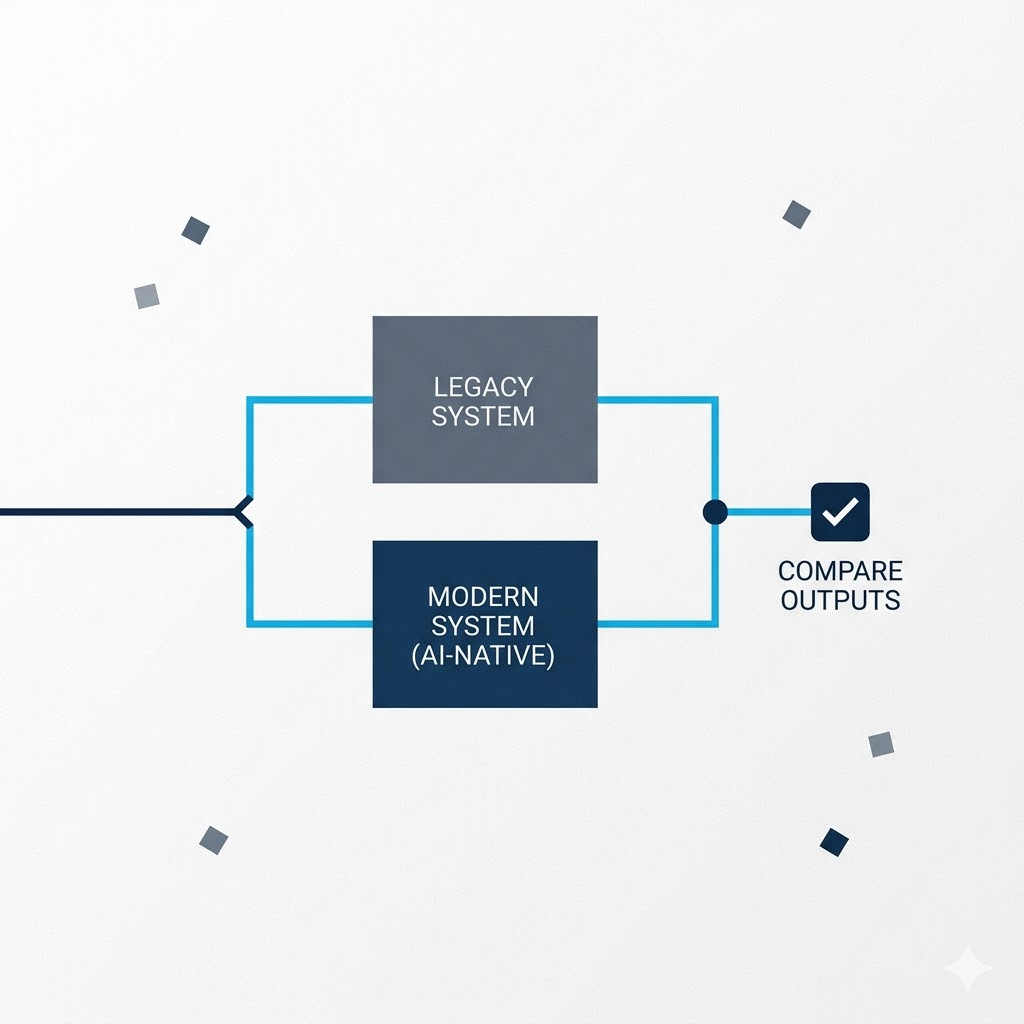
Big-bang migrations fail. We modernize one capability at a time with the strangler fig pattern, running new systems alongside the old until the legacy core is safely retired.
Decades-old monoliths trap data and cannot integrate with modern tools.
An API gateway that securely exposes legacy data to new web apps without altering the core database.
Regulated legacy infrastructure blocks rapid deployment of new digital products.
Modular microservices that handle new product logic while syncing securely with the legacy core.
Fragmented on-premise systems give zero real-time visibility.
Event-driven architecture that pushes updates across systems instantly, replacing overnight batch jobs.
New and legacy run side by side, traffic routed in phases .
The strangler fig pattern stands a modern system beside the legacy core, then routes traffic away increment by increment , so operations never stop and the old core is retired only once the new path is proven.
A majority of organizations have migrated most workloads to the cloud, making it the operational baseline.
After years of failures, multi-year migrations are giving way to composable, incremental modernization.
Modern systems are introduced alongside the legacy core, slowly routing traffic away in phased cutovers.
Big-bang migrations fail when teams try to replace everything at once without adoption or data quality. These figures describe the global transformation market, not Techtiz engagements—and what standing still costs.
Of digital transformations miss their original objectives
BCG, 2025
Of broad business transformations fail to achieve their ambitions
Bain, 2024
Of operations leaders say tech investments have not delivered
PwC, 2026
Estimated annual global cost of failed transformation and migration
Gartner, 2026
New capabilities run alongside the legacy core; users migrate incrementally, not in one risky cutover.
A secure layer that exposes legacy data to modern apps without altering the core database.
New product logic built as modular services that sync with the legacy core.
Real-time data replication and robust rollback so operations never stop during a cutover.
Two builds where the work was in the parts that do not demo.
Why it is relevant: an access-controlled platform with traceable actions, the governance a regulated modernization requires.
Why it is relevant: a production product we integrated into a running operation without downtime.
If your SLED scope calls for modernizing entrenched municipal systems, we build the migration behind the prime. The boundary is fixed on purpose.
NDA-first, subcontract-only. We work behind the prime, under your brand. We do not pursue prime contracts and we never face the agency.
Zero-downtime, by design. Phased cutovers, robust rollback, and real-time data replication that integrate with on-premise municipal databases.
Capability over claims. Strangler-fig migration, API gateways, and microservices mapped to your bid’s technical scope.
No. We deploy new functionality alongside your current tools and migrate users only when the new system is fully validated.
They fail when companies attempt massive multi-year overhauls without prioritizing user adoption or data quality. We focus on incremental, high-impact changes.
We establish automated, real-time replication between your legacy database and the new system, so data integrity holds throughout the phased cutover.
Mid-market companies cannot absorb the financial risk of a 3-year timeline. We deliver focused work that produces measurable operational efficiency quickly.
Tell us which legacy system is holding you back. We will map a migration that does not stop your operations.
Scope a modernization